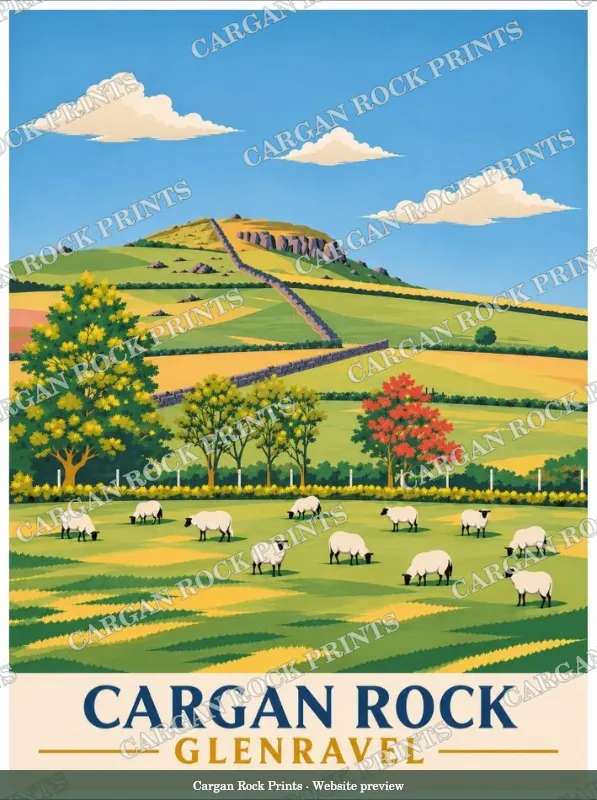
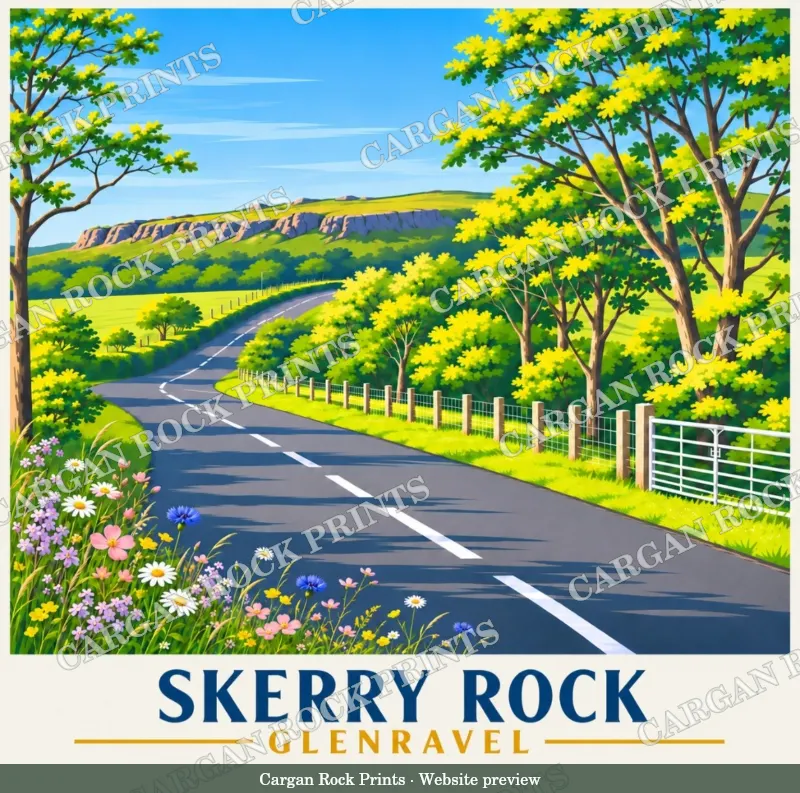
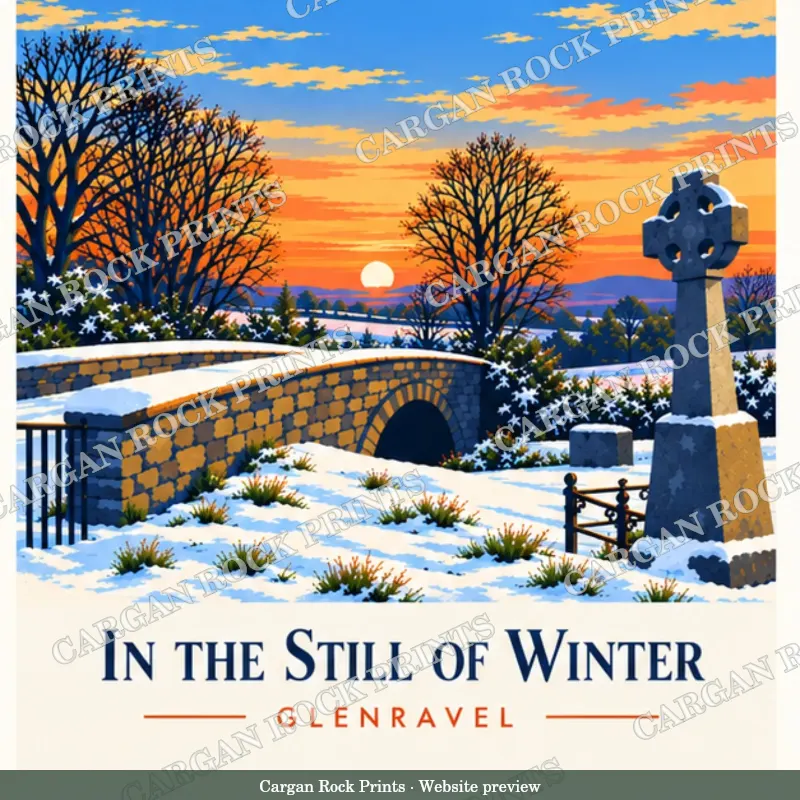
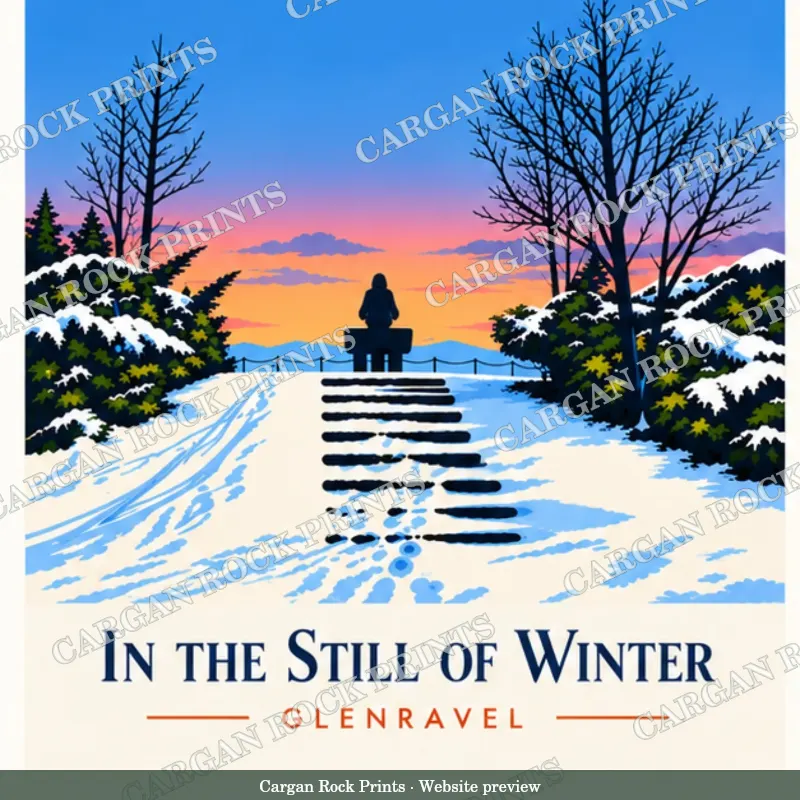
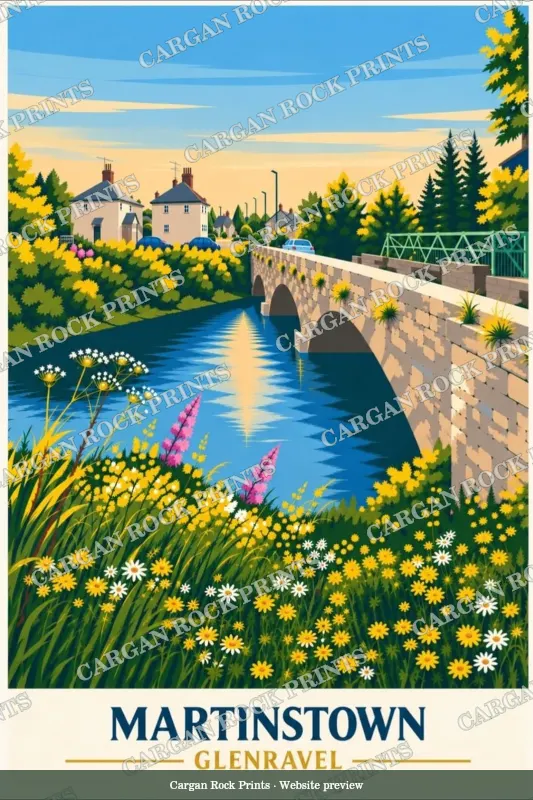
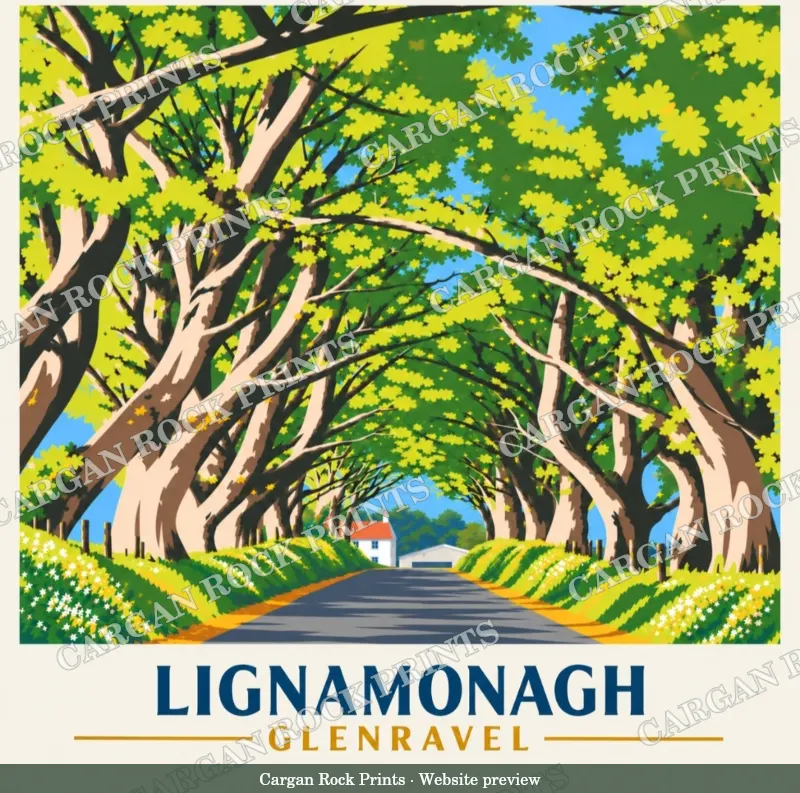
Glenravel, known as the “Tenth Glen”, is an area of County Antrim with familiar hills, a rich iron ore mining history, proud GAA roots and a strong sense of community.
Choose a print to take a closer look. Selected designs are available in different formats. Ask about your favourite →
A PLACE FOR EVERY PRINT
Small keepsakes. Lovely gifts.
A favourite view for your wall or a little reminder of home on the table. Selected images are available in these three formats.
How the prints are created
Each print begins with a photograph of Glenravel. During digital editing, the colour palette is adjusted and selected details may be simplified while retaining the features that make each scene recognisable. The stylised image is then developed into a digital painting.
01 / FOR THE TABLE
Ceramic tile coasters
10 × 10 cm
A little piece of Glenravel for your coffee table. Selected images on square ceramic tile coasters.
02 / FOR YOUR WALL
Mounted art prints
20 × 30 cm print (30 × 40 cm with mount)
A larger mounted art print. Give a favourite local landscape or landmark its own space.
03 / A SMALL KEEPSAKE
Mounted square art prints
15 × 15 cm print (20 × 20 cm with mount)
A compact mounted square art print. A thoughtful gift or a little piece of home.
Format illustrations are for guidance. Please enquire about available designs and prices.
THE PLACE BEHIND THE PRINTS
Inspired by Glenravel.
Nestled in the Antrim Hills in County Antrim, Glenravel is affectionately known as the “Tenth Glen”. Encompassing Cargan, Martinstown and Newtowncrommelin, it is a place of green fields, stone walls and familiar hills — a landscape full of stories and a strong sense of home.
Beneath those peaceful slopes lies a rich industrial past. Iron ore mining took off in the 1860s, with workings at Slievenanee, Cargan and beyond. The old furnace at Newtowncrommelin remains a reminder of this chapter in the glen’s history.
The Ballymena, Cushendall and Red Bay Railway was built on a three-foot gauge to carry ore from the Glenravel mines. The line reached Cargan in 1875 and extended to Retreat in 1876. Short branches linked the mines to the main line, carrying ore to Ballymena for onward shipment through Larne.
Passenger trains reached Parkmore in 1888, bringing visitors within reach of Glenariff and its waterfalls. Parkmore was the last passenger stop, while goods trains continued to Retreat. Passenger services to Parkmore ended in 1930, and goods trains ran until 1937.
Community is at the heart of Glenravel. Its proud GAA tradition stretches back to 1916–17, with Con Magees bringing people together through Gaelic games and culture. Traditional music sessions at the Skerry Inn in Newtowncrommelin have brought musicians, neighbours and visitors together over the years. Local heritage projects also keep traditional crafts and farming skills alive, celebrating the neighbourly spirit that makes the glen special.
From cherished landmarks to everyday views, Cargan Rock Prints celebrates this connection to place — a little piece of Glenravel to keep close, wherever home may be.